

April 8, 2025
Lease abstraction is an essential part of commercial real estate. It transforms dense legal documents into structured, actionable data that can support everything from financial forecasting to portfolio management. But like any complex process, it comes with potential pitfalls that can lead to costly errors and inefficiencies.
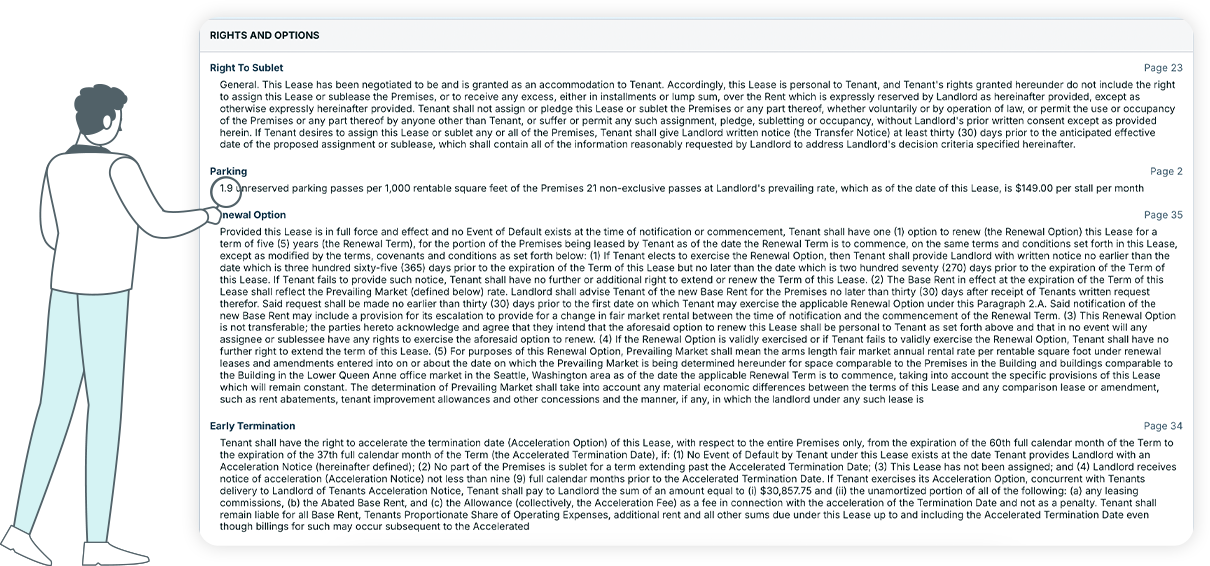
At Prophia, we've seen firsthand the challenges CRE professionals face when turning lease documents into intelligence they can actually use. Here are some of the most common traps—and how to avoid them.
1. The "Human Error" Hurdle
Manual lease abstraction is inherently susceptible to human error. Misreading clauses, overlooking critical details, or simply entering data incorrectly can have significant downstream consequences. Think missed rent escalations, incorrect renewal options, or inaccurate expense reimbursements.
Those errors can compound over time, creating financial discrepancies and unnecessary risk.
2. The "Data Silo" Struggle
When lease data is scattered across spreadsheets, PDFs, and multiple systems, it becomes difficult to manage and even harder to trust.
Collaboration suffers, reporting becomes time-consuming, and teams can end up working from different versions of the same information. Without standardized, accessible lease intelligence, informed decision-making becomes harder than it needs to be.
3. The "Interpretation Labyrinth"
Commercial leases are full of complex language, exceptions, amendments, and provisions that interact with one another.
Even experienced professionals can interpret nuanced clauses differently, creating inconsistencies in how important lease terms are captured and ultimately used across the business.
4. The "Scalability Stalemate"
As portfolios grow, manual abstraction becomes increasingly time-consuming and resource-intensive.
More leases mean more amendments, more critical dates, more data to maintain, and more opportunities for information to become outdated. Scaling the process with additional people alone can quickly create bottlenecks.
5. The "Lack of Real-Time Visibility"
An abstract is only useful if the information inside it remains accessible and current.
When lease intelligence lives in static files or disconnected systems, teams can struggle to answer portfolio-level questions, identify upcoming obligations, compare terms, or quickly understand where risk and opportunity exist.
Moving Beyond Traditional Lease Abstraction
AI has dramatically changed how quickly CRE teams can extract information from leases. But faster abstraction is only part of the opportunity.
Prophia uses purpose-built AI to turn leases, amendments, and related agreements into structured, source-backed intelligence that teams can use throughout the life of an asset.
With Prophia, CRE teams can:
- Capture critical lease intelligence: Structure economics, rights, obligations, options, critical dates, and other important provisions.
- Trace information back to source: Connect data and answers directly to the governing lease language for fast verification.
- Keep intelligence current: Incorporate amendments and changing terms so lease information continues to reflect the agreements governing the asset.
- Analyze across assets and portfolios: Compare terms, identify exceptions, track exposure, and answer questions across more than one lease at a time.
- Put AI to work: Use AI Assistants and purpose-built workflows to surface information, analyze data, and reduce manual work.
- Connect lease intelligence across the business: Use Prophia data in reporting, CRE systems, APIs, and other AI environments.
For deeper operating needs, Prophia can also combine its technology with CRE expertise to help validate complex information, investigate discrepancies, perform reconciliations, and maintain the intelligence teams depend on over time.
Turn Lease Data Into Intelligence You Can Use
The challenges of manual abstraction and fragmented lease data are real—but abstraction doesn't have to end with a static summary.
Prophia helps CRE teams move from documents to structured intelligence they can use to manage assets, analyze portfolios, monitor risk, and increasingly automate the work surrounding them.
Ready to put your lease intelligence to work?
See how Prophia transforms commercial real estate documents into trusted intelligence →